Your listing might have twelve excellent photos. The floor plan might be clear and well-annotated. The copy might be sharp and accurate. None of that matters if the first image doesn’t stop the scroll.
Buyers searching on Rightmove or Zoopla are not reading listings, they are filtering them. They have set their parameters, and now they are scrolling through rows of thumbnails making pass/click decisions at a speed that research consistently places at under three seconds per listing. In that window, one image does almost all of the work. Get it right and the rest of your listing gets seen. Get it wrong and it doesn’t matter how good the rest is.
The uncomfortable truth for most agents is that the lead photo is chosen not by design but by default. The front exterior goes first because it feels like the most honest representation of what the buyer is purchasing, the property itself, not just a room. This logic sounds reasonable. It is also, for the majority of residential listings in the UK, the wrong call.
This article is about the lead image specifically: why it matters as much as it does, why the exterior is usually not the right choice, how to select the room that earns the most clicks, and what to do to make sure that room is in the best possible condition for the thumbnail that a buyer will see.
The 3-Second Decision: How Buyers Actually Browse Listings
It helps to understand what buyers are actually doing when they search a portal, because it bears very little resemblance to the careful, considered reading that listing agents tend to imagine.
A buyer with a search set for three-bedroom homes in a specific postcode range at a given price point is not short-listing from a long list of equally considered options. They are running a visual filter, at speed, through a results page that might show twenty or thirty properties. For each thumbnail, the brain makes a near-instant assessment, compelling or not compelling, and the finger either scrolls or taps. There is no conscious deliberation at this stage.
The factors that earn a tap are not rational ones. They are emotional: warmth, light, space, a sense of liveability. The factors that earn a scroll-past are equally immediate: dark, cramped, cluttered, or simply unremarkable, indistinguishable from every other result on the page.
Here’s what this means in practical terms. The buyer who clicks through to your listing has already formed a positive initial impression before they’ve read a single word. The buyer who doesn’t click has already formed a negative one, and they will not return unless the price drops enough to override it. Your lead image creates an impression that your listing copy, your floor plan, and your carefully selected interior photos never get the chance to change.
This is why choosing the lead photo deserves as much deliberate thought as any other marketing decision on a listing, and why getting it right consistently is one of the most impactful habits an agent can develop.
Why the Front Exterior Is Usually the Wrong Choice
The default lead photo in UK residential estate agency is the front exterior, and it’s worth understanding exactly why this default underperforms before making the case for what replaces it.
The exterior-first approach has a logic: you are selling the property, not a room, and the exterior is the most accurate representation of what the buyer is actually acquiring. A buyer who falls in love with the listing should have an accurate idea of what they’re coming to see. This is true, and reasonable, and it doesn’t change the fact that for most residential listings, the exterior is a poor thumbnail.
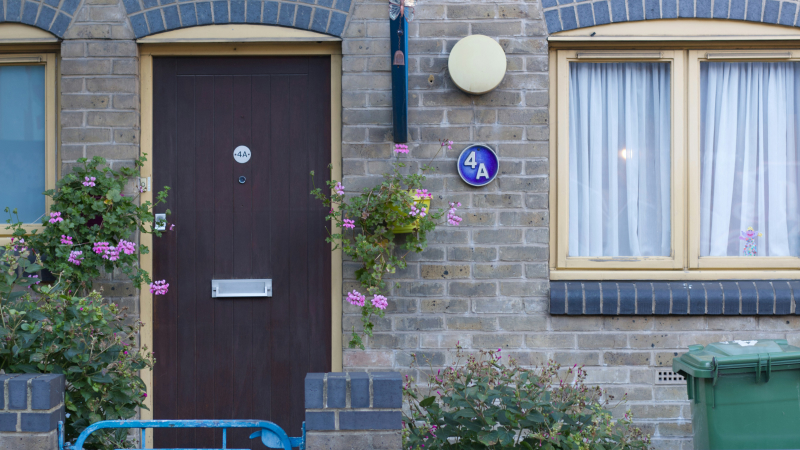
The problem starts with the visual environment of the portal. Most UK residential properties, terraced houses, semis, purpose-built flats, nineties new builds, photograph as variations on a similar visual theme: a stretch of wall, a front door, a strip of sky. In a search results page full of these, no individual exterior stands out. The thumbnail fails its primary job, which is to differentiate this listing from the others on the page and give a buyer a reason to click.
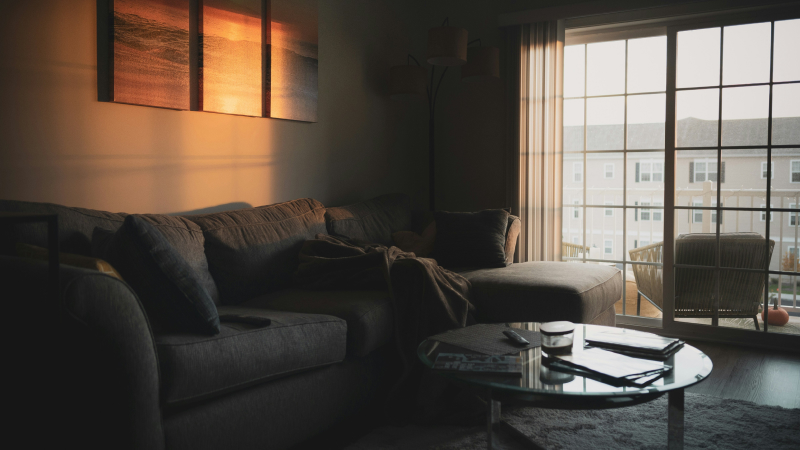
The exterior also fails on emotional terms. The instinctive response to a warm, well-lit living room is entirely different from the instinctive response to a terraced house facade in grey January light. One communicates warmth, home, liveability. The other communicates a building. Buyers are not buying square footage, they are buying the life they imagine living there. An exterior tells them very little about that.
There are exceptions. A detached property with well-presented gardens and genuine kerb appeal. A period home with architectural distinction. A new build on a development where the street presentation is genuinely impressive. In these cases, the exterior communicates something meaningful and positive, and it can work well as a lead image. The test is honest and specific: would this exterior, as a thumbnail on a busy results page, make a buyer stop? If the answer is yes, use it. If the answer is “probably not, but it’s what we always do,” that’s the default talking, not a decision.
The Right Room: How to Choose a Lead Image That Earns Clicks
The question to ask when selecting a lead image is not “which photo came out best technically” or “which room is most impressive in person.” It is “which image, as a thumbnail, will make the most buyers want to see more?” These are not the same question, and conflating them is where lead photo decisions most often go wrong.
The Rooms That Tend to Work
The living room is the most reliable performer as a lead image for most residential properties. It is the emotional heart of the home, the room buyers most immediately associate with the life they’re imagining, and a well-lit, well-proportioned living room communicates warmth and space instantly, even at thumbnail size. For family homes, second-mover properties, and anything in the mid-to-upper bracket, a strong living room photo leads more consistently than almost any alternative.
The kitchen-diner has become increasingly effective as a lead image, particularly as open-plan layouts have become the most sought-after feature in a large proportion of buyer searches. A generous kitchen-diner that reads as light and spacious in a thumbnail communicates contemporary living clearly and immediately, and it differentiates a listing from the exterior-heavy competition on the page.
The master bedroom works well for specific buyer profiles, younger buyers, couples without children, second-steppers, where the aspirational quality of the room has strong emotional purchase. A large, well-proportioned master with good light can be highly effective as a lead image when the target demographic responds to bedroom quality.
The garden is chronically underused as a lead photo, and for certain properties and seasons it is the strongest possible choice. A garden that is genuinely impressive, good size, well-maintained, receives good light, will stop a scroll in a way that no interior can for buyers who are actively searching for outdoor space. The caveat is seasonal: a garden that sings in July is a liability in February, and the lead image should reflect the conditions at the time the listing is live.
The Rooms That Don’t Work as Lead Images
Small bedrooms, bathrooms, hallways, and utility spaces are supporting images, not lead material. Even an excellent bathroom photo does not tend to earn a click at thumbnail size, it communicates function rather than aspiration, and buyers are not making an emotional connection with a bathroom in two seconds. The same is true of hallways, which look narrow and dark in thumbnails regardless of how inviting they may be in person, and small bedrooms, which communicate limitation rather than possibility.
What Works at Thumbnail Size
This is a technical consideration that is systematically overlooked: a thumbnail is approximately 300 pixels wide on most portal displays. Fine detail disappears at this size. Texture becomes flat. Accessories become visual noise. What reads clearly at thumbnail size is space, light, warmth, and depth, a sense that the room extends beyond the frame.
The practical implication is that evaluating potential lead images on a laptop screen at full resolution is not the same as evaluating them as buyers will see them. Before making a final selection, view the image at thumbnail size, resize it in whatever tool you use, or open the listing in a portal preview, and assess it from that perspective. This step takes thirty seconds and will occasionally change the decision entirely.
The Seasonal and Timing Factor
The same property needs a different lead image at different times of year, and in different light conditions, and this consideration is rarely factored into photoshoot planning.
A south-facing living room that is flooded with warm afternoon light makes a compelling lead in autumn or winter, when outdoor light is weak and interior warmth is the emotional pitch. The same room photographed in June at 4pm, when the sun is streaming directly into the lens, will be overexposed and uncomfortable to look at. A north-facing bedroom that looks flat and blue on an overcast day photographs beautifully on a bright cloudy day, when the light is even and soft.
Building the photoshoot timing around the lead room specifically, rather than scheduling it when is convenient and hoping for the best, is a small operational change that can make a meaningful difference to the quality of the most important image in the listing.
Staging the Lead Room: Why the First Photo Needs Your Best Work
If the lead image is where the click decision is made, it is also where the greatest effort in terms of preparation and presentation should go. The asymmetry here is worth naming directly: the instinct is often to work through the property room by room and give each roughly equal treatment. In practice, the lead room deserves disproportionate attention, because its performance determines whether the rest of the listing is seen at all.
What “best work” means for the lead room is straightforward in practice. The room should be completely clear of clutter and personal items, not tidied, but genuinely cleared. Maximum natural light means curtains open, blinds up, and lights typically off (flash in occupied rooms flattens texture and creates glare that reads badly at any size). The framing should be from the corner of the room, maximising the sense of depth and the visible floor area. A single deliberate styling touch, a cushion arrangement, a plant, a throw casually positioned, adds warmth without competing for attention.
Virtual Staging and the Lead Image
For empty properties, the lead room almost always needs virtual staging. An empty living room or master bedroom will not earn a click regardless of how well it photographs, it communicates vacancy rather than home, and the emotional signal is cold rather than warm. Staging the lead room, whether physically or digitally, is not optional for vacant properties if click-through is the goal.
For occupied properties where the vendor’s furniture is dated, bulky, or mismatched, virtual staging the lead room specifically can transform the thumbnail performance of the whole listing. A room that currently reads as cluttered or old-fashioned presents instead as contemporary and spacious, and this change happens in the listing’s most important image, which has an outsized effect on whether the rest of the listing gets seen.
VirtualStagingExpert can stage an individual room rather than requiring a full property package, which means agents can apply the effort and the cost exactly where it makes the most difference: the image that determines whether buyers click through at all.
The Portal Thumbnail: Technical Details That Matter
Rightmove and Zoopla display lead images at different aspect ratios and crop them differently in search results. Understanding this prevents a well-composed photo from being ruined by the way the portal displays it as a thumbnail.
Rightmove’s search result thumbnail operates at approximately a 3:2 ratio. Photos that are significantly taller or wider than this will be cropped, potentially removing the elements of the image that make it most compelling. The key visual content of the lead image should sit as centrally as possible within the frame, so that any crop that occurs at the edges doesn’t remove something important.
Portals also compress images when displaying them in search results, a process that degrades quality, particularly in darker areas of an image or where there is fine detail. Starting with the highest-resolution file available, and ensuring the lead image has been optimised for brightness and contrast (slightly brighter and slightly higher contrast than looks natural at full size often works best once compressed and reduced to thumbnail dimensions), reduces this degradation.
The most important check is simple: before the listing goes live, open it in a portal search result, not the agent’s back-end system, and view the thumbnail as a buyer would. This takes two minutes and will occasionally catch a crop or display issue that would otherwise have gone unnoticed until the listing had been live for days with a weaker thumbnail than intended.
A Simple Lead Image Checklist
Before confirming the lead photo on any listing, work through the following:
- Is the lead image based on a decision about what earns a click, or on habit (exterior default)?
- Does the image read clearly at thumbnail size, space, light, warmth visible within two seconds?
- Is the room completely clear of clutter and personal items?
- Is natural light maximised, curtains open, blinds up?
- Is the shot framed from a corner to show maximum depth?
- Is the lead room the right choice for the current season and light conditions?
- If the property is empty, has the lead room been virtually staged?
- Has the thumbnail been checked on both Rightmove and Zoopla displays before going live?
Frequently Asked Questions
What should the first photo be on a Rightmove listing?
The first photo should be whichever image, viewed at thumbnail size, is most likely to earn a click from the target buyer. For most residential properties this means a well-lit interior room, usually the living room, kitchen-diner, or master bedroom, rather than the front exterior, unless the exterior has genuine architectural distinction or strong kerb appeal.
Does the lead photo on Rightmove affect enquiries?
Significantly. The lead image is the thumbnail buyers see during their scroll, and it is the primary factor in whether they click through to the listing at all. A weak lead photo reduces click-through regardless of the quality of the rest of the listing, because the rest of the listing never gets seen.
Should estate agents use the exterior as the first photo?
Not by default. Use the exterior as the lead image when it is genuinely distinctive and would stop a buyer’s scroll. For most standard residential properties, terraces, semis, purpose-built flats, a strong interior room will earn significantly more clicks than a typical street-facing exterior.
How do I improve click-through on my Rightmove listing?
Start with the lead image. If enquiries are flat but the property has genuine merit, changing the lead photo is the lowest-friction first intervention available, it can be done without a new photoshoot, costs nothing, and can be tested and measured within a few days of the change going live.
Can virtual staging improve click-through rates on portals?
Yes, particularly for empty properties where an unstaged room will perform poorly as a thumbnail. Staging the lead room digitally is one of the highest-return decisions on any listing where the lead room is vacant or presenting below the standard of the target buyer’s expectations.
The Image That Decides Everything
Twelve great photos mean nothing if the first one doesn’t earn a click. The lead image is not a documentary record of the property, it is an advertisement, and it should be chosen with that purpose in mind.
The shift from default to deliberate takes almost no time once it’s built into the workflow: selecting the lead room based on what works rather than what’s customary, ensuring that room is prepared and photographed at its best, and checking the thumbnail as a buyer would see it before the listing goes live.
These are not dramatic changes. But they are consistent differentiators. Agents who apply this level of thought to the lead image across their entire portfolio will generate more clicks, more enquiries, and shorter days on market, without spending more on photography or marketing.
For empty properties, or any listing where the lead room needs a stronger visual presence, VirtualStagingExpert stages individual rooms in minutes, making it practical to apply staging effort exactly where it has the most impact.