Ask a home staging company what they charge and you'll likely hear something between £800 and £5,000, depending on the property. Then look at a virtual staging provider and they'll show you between £1 to £20 per image.
That gap is not a rounding error. It's a fundamental difference in how the two services work, and for estate agents who are absorbing or recommending staging costs on behalf of clients, it's a difference that shows up directly in margin.
This guide breaks down the full picture of home staging costs in the UK: what traditional staging actually costs, what drives those prices up, what virtual staging costs in comparison, and how to decide which option actually makes sense for a given property. Whether you're a seller trying to budget for a move, or an agent building a scalable listings process, the numbers here should make the decision clearer.
What Is Home Staging, And Why Does It Affect Sale Price?
Home staging is the practice of preparing a property for sale by presenting it in its most marketable condition. That might mean bringing in furniture and accessories, decluttering and rearranging what's already there, or digitally furnishing photographs so that listings look their best online.
The rationale is well-established. Staged homes consistently attract more interest, generate more viewings, and sell faster than equivalent unstaged properties. According to research from the Real Estate Staging Association, staged homes spend 73% less time on the market on average. UK estate agents frequently report that well-presented properties command higher offers, particularly in competitive markets where buyers are making shortlist decisions based on Rightmove and Zoopla thumbnails before they ever set foot inside.
The key question isn't whether staging works. It does. The question is what it costs, and whether the type of staging you choose is proportionate to the return you can reasonably expect. That means understanding the difference between physical and virtual approaches before committing to either.
Types of Home Staging Available in the UK
Not all property staging is the same, and the type you choose determines everything about the cost structure. There are three main formats operating in the UK market.
Traditional physical staging is what most people picture when they hear the term. A professional stager visits the property, assesses its weaknesses, and either works with existing furnishings or brings in hired furniture and accessories to create a compelling presentation. This is the highest-cost option, and it involves real logistics: delivery, arrangement, ongoing hire fees, and eventual removal.
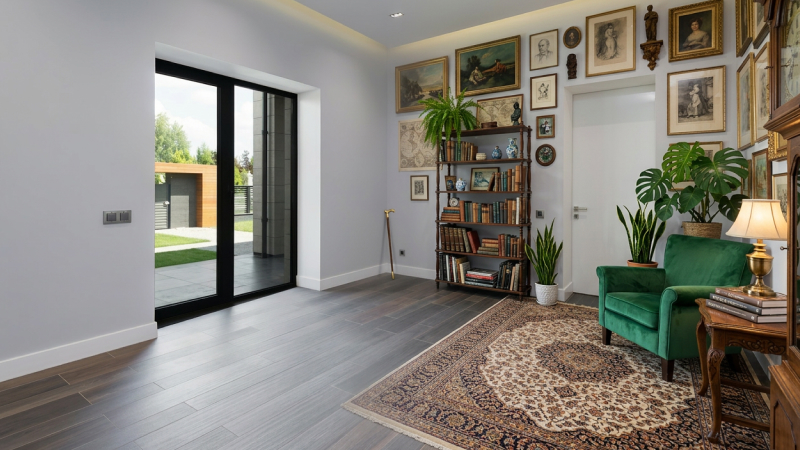
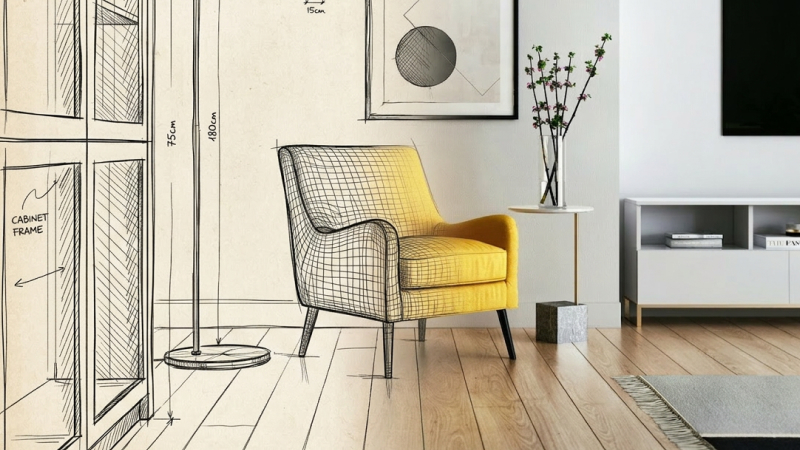
Virtual staging, also known as digital staging or digital home staging, takes a different approach entirely. The property is photographed empty or as-is, and those photos are then digitally furnished using software. No furniture is physically moved. No one visits twice. The result is a set of listing-ready images that look professionally styled, delivered within minutes of submitting the photos. Older virtual staging tools relied on 3D rendering software, which produced strong results but required skilled artists and longer turnaround times. AI has changed that, platforms like VirtualStagingExpert.com can furnish a room realistically in minutes, at a fraction of the cost. Virtual home staging has become increasingly mainstream among UK agents precisely because the output, when done well, is indistinguishable from a physically staged shoot, and AI has made that quality more accessible than ever.
Soft staging sits in the middle. Rather than hiring full furniture sets, a stager brings in accessories, cushions, artwork, plants, mirrors, to layer onto an otherwise occupied home. It's less disruptive than full physical staging and cheaper, but it still involves labour, travel, and hire costs that make it significantly more expensive than virtual alternatives.
For vacant or empty properties, the choice is typically between full physical staging and virtual staging. For occupied homes, virtual staging often wins by default, it requires no upheaval, no furniture hire, and no coordination headache.
How Much Does Traditional Home Staging Cost in the UK?
This is where the numbers start to sting. Traditional home staging costs in the UK vary considerably depending on the size and condition of the property, whether it's occupied or empty, how long it's on the market, and where it's located.
Here's a realistic breakdown of what to expect:
| Property Type | Typical Cost Range | What's Included |
|---|---|---|
| Occupied home, consultation only | £150–£500 | Professional advice session; seller implements changes themselves |
| Occupied home, full styling service | £800–£2,500 | Stager sources and arranges furniture/decor; ongoing support |
| Empty/vacant property, staged with hired furniture | £1,500–£5,000+ | Full furniture hire for 4–8 weeks minimum |
| Luxury or large property | £5,000–£15,000+ | Premium furniture hire, multiple rooms, extended campaign |
These figures represent the initial staging cost, not necessarily the total spend. Most furniture hire contracts run for a minimum of four to eight weeks. If the property sits on the market longer than that, which happens regularly, costs compound. A property that takes three months to sell could end up costing two to three times the original quote once hire extensions are factored in.
It's also worth noting what's not always included in headline quotes. Many home staging companies charge the initial consultation fee separately, typically between £150 and £350. De-staging (removing the furniture after sale) is often an additional charge. If the stager is travelling more than an hour, expect a travel surcharge on top.
Regional pricing adds another layer. Home staging in London costs materially more than anywhere else in the UK, typically 30–50% above the national average. That's driven by higher labour rates, more expensive furniture hire, and the premium that central London staging companies charge for their time. A property in Manchester or Birmingham will cost noticeably less to stage physically than an equivalent property in Kensington, but it's still a significant spend either way. Edinburgh and Cardiff sit somewhere in between.
Who pays is also worth addressing directly. Traditionally, the seller covers staging costs as part of their sale preparation. But increasingly, estate agents are offering staging as part of their service proposition, either absorbing the cost to win listings or arranging it on the vendor's behalf. When agents take on that cost, it comes directly out of their margin. That commercial reality is exactly why virtual staging has started to look so attractive to volume-focused agencies.
What Drives Traditional Home Staging Costs Up?
If you've ever received a home staging quote and wondered why it's so high, the answer usually comes down to five factors.
Property size is the most obvious driver. More rooms means more furniture, more accessories, and more hours of labour. A two-bed flat and a five-bed detached house are completely different propositions for a stager, and the pricing reflects that.
Empty versus occupied makes a significant difference. An occupied home already has furniture, the stager's job is to rearrange, supplement, and style what's there. An empty property needs everything brought in from scratch, which means full furniture hire on top of labour. Staging an empty house is substantially more expensive than styling an occupied one, and the hire costs keep running until the property sells.
Hire duration is the hidden multiplier that catches sellers off guard. Most staging companies quote a package price that covers the first four to eight weeks. After that, extensions are charged weekly or monthly. A property that takes six months to sell can accumulate staging costs that dwarf the original quote.
Location carries a meaningful premium. Home staging companies based in London charge more for their time and their furniture, and properties in high-demand urban markets often require more sophisticated staging to justify premium asking prices.
Stager tier matters too. The best home staging services in the UK, those with strong portfolios and established relationships with property developers and premium agents, charge day rates of £500–£1,000 or more for lead stagers. You're paying for taste, experience, and a network of quality furniture suppliers. Budget stagers exist at lower price points, but the results often show.
For agents who are recommending or funding staging for their vendors, these cost drivers add up to a difficult conversation. Every time a property takes longer to sell than expected, the staging bill grows, and so does the pressure on the relationship.
How Much Does Virtual Staging Cost in the UK?
This is where the conversation changes completely.
Virtual staging in the UK varies significantly in cost depending on the provider's quality tier and turnaround speed. AI-powered tools like VirtualStagingExpert.com have changed the pricing landscape considerably, covering everything from budget to high-end results at around £1–2 per image, with photos ready in minutes rather than the days or weeks traditional 3D rendering services typically require.
To put that into context with a real example: staging an empty three-bedroom property virtually using 15 images across the key rooms would cost as little as £15–30 with VirtualStagingExpert. The same property staged physically with hired furniture would cost between £2,000 and £4,000 for the first hire period, before any extensions.
What's included in a virtual staging price is worth spelling out. With VirtualStagingExpert.com, you get AI-furnished photos delivered in minutes, not 24–48 hours, with no logistics costs, no furniture insurance, no removal fees, and no ongoing hire charges. The price you pay is the total price.
For estate agents managing a regular flow of listings, the maths becomes compelling very quickly. At around £1–2 per image, staging 3–4 photos per property across 20 listings a month works out to roughly £60–160 total, a negligible marketing cost compared to physical staging fees running to thousands per property, per listing period. Virtual staging stops being a staging budget and starts looking like a standard marketing line item.
The one caveat worth raising is quality variation. Not all virtual staging is equal, some providers produce renders that look unconvincing, with flat lighting, furniture that doesn't match the room's proportions, and styles that feel generic. That damages buyer trust rather than building it. VirtualStagingExpert.com addresses this across all tiers, from budget to high-end, using AI that matches the photography's lighting conditions and scales furniture coherently to the room, which is ultimately what drives results.
Virtual Staging vs Traditional Staging: A Side-by-Side Cost Comparison
For anyone trying to make a direct decision between the two approaches, this is the clearest way to look at it.
| Factor | Traditional Staging | Virtual Staging |
|---|---|---|
| Average cost, 3-bed property (3–4 photos) | £1,500–£4,000 | £3–£8 with VirtualStagingExpert.com |
| Turnaround time | 1–2 weeks to arrange and deliver | Minutes with VirtualStagingExpert.com |
| Requires empty property | Yes (usually) | No |
| Logistics, delivery and removal | Yes | No |
| Works for occupied homes | Difficult | Yes |
| Ongoing hire costs | Yes | No |
| Scalable across a portfolio | No, cost multiplies per listing | Yes |
| Affects physical viewing experience | Yes | No (photos only) |
The margin case for agents is straightforward. Traditional staging eats into agency profit on every listing where it's offered as a service. Virtual staging doesn't. At £1–2 per image at the entry level, a ten-image property set costs less than a round of coffees for the team. For an agency running 15–30 listings per month, switching to virtual staging as a default represents a potential saving of tens of thousands of pounds annually, either recovered as profit or reinvested in other marketing.
That said, physical staging isn't without its use cases. For high-value properties where buyers are conducting serious in-person viewings and need to feel emotionally connected to the space, physical presentation during those viewings matters in a way that photography can't replicate. Empty new builds, show homes, and luxury properties priced above £1.5 million often benefit from the full physical treatment. The return on investment is there, it's just expensive.
For the vast majority of UK residential listings, though, the buyer journey begins online. Rightmove and Zoopla are where decisions get made, where shortlists get cut, and where first impressions form. In that environment, a virtual staging service that makes listing photos compelling is doing the same job as a physical staging company, at a fraction of the cost.
Is Home Staging Worth the Cost? What the Data Says
The honest answer is yes, with some nuance about which type makes commercial sense.
Staged homes in the UK consistently outperform unstaged equivalents across the metrics that matter. They spend fewer days on the market, generate more viewings per listing, and frequently achieve closer to or above the asking price. Research from Rightmove has indicated that properties with high-quality listing photographs attract significantly more interest than those with poor presentation. The average buyer makes a decision about whether to view a property within seconds of seeing the listing thumbnail, and that decision is driven almost entirely by how the photography looks.
For sellers, the ROI calculation on staging is usually positive. A £2,000 staging spend that achieves an additional £8,000 on the sale price is a straightforward win. Even a staging investment that purely accelerates the sale, cutting two months off the time on market, saves on mortgage payments, utility costs, and the ongoing stress of carrying a property that hasn't sold.
For agents, the calculus is different. The question isn't really "is staging worth it?", it's "which type of staging gives me the best return per listing, at the scale I operate?" An agent managing a high-volume residential portfolio can't absorb £2,000–£4,000 per property in staging costs and remain profitable. But they can absorb £15–£250 per property in virtual staging costs without blinking. At that price point, it becomes a standard part of the listing process rather than a negotiation point.
Best Virtual Staging Companies in the UK
The virtual staging market in the UK has matured considerably over the last few years. A few names are worth knowing.
VirtualStagingExpert.com covers the full spectrum, from budget-friendly results to high-end, lighting-matched renders, at around £1–2 per image, with photos ready in minutes. Whether you're staging a new-build apartment or a period Victorian terrace, it's built to handle the variety of property styles UK agents deal with day-to-day.
Fiverr freelancers represent the cheapest end of the market, but quality is highly variable, there are talented operators on the platform, but also plenty producing renders unconvincing enough to harm a listing rather than help it.
Specialist 3D rendering providers like BoxBrownie typically sit in the £15–£25 per image range, offering better furniture libraries and lighting-matched results, but with slower turnaround times and significantly higher costs.
When evaluating any provider, the most important things to check are their before-and-after portfolio, specifically with UK property styles, since Victorian terraces, period flats, and new-build semis behave differently from American interiors, their revision policy, and their guaranteed turnaround time. One note on the common search "virtual staging companies near me": location is irrelevant for virtual services. Any provider can handle any UK property remotely. The best provider for your listings is the one with the strongest portfolio, regardless of where they're based.
Virtual Staging Before and After: What to Realistically Expect
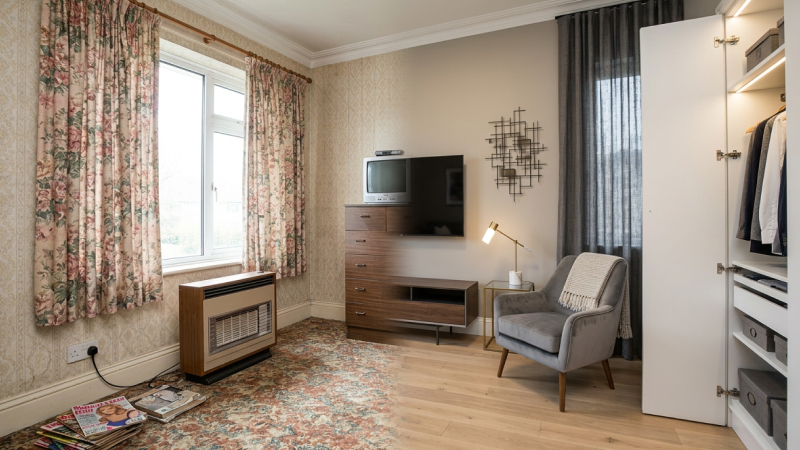
The best virtual staging work is genuinely impressive. A good render takes an empty, echo-y room and makes it feel lived-in, warm, and sized correctly, the furniture helps buyers understand how the space works in a way that bare walls simply can't communicate. When the lighting is matched properly and the perspective is right, the result is indistinguishable from a standard property photograph.
The worst virtual staging work is immediately obvious. Furniture that floats slightly above the floor, shadows that point in the wrong direction, sofas that are too large or too small for the room, these are the hallmarks of budget providers working quickly without care. That kind of render doesn't just fail to help; it actively makes buyers suspicious.
For realistic virtual staging that actually converts, look for providers who match their renders to the ambient lighting of the original photograph, choose furniture styles appropriate to the property's character, and work at a resolution consistent with the listing images. VirtualStagingExpert.com is built around exactly these principles, AI that reads the room's lighting and scales furniture coherently, across all style tiers.
Turnaround is where AI virtual staging pulls decisively ahead of traditional providers. While most 3D rendering services take 24–48 hours and charge a surcharge for same-day delivery, VirtualStagingExpert.com delivers results in minutes as standard, no rush fees, no waiting.
The practical recommendation for agents new to virtual staging: start with a sample set of 3–4 photos, roughly 2–3 rooms, which is typical for a single listing, before committing to a full workflow. With VirtualStagingExpert's pricing at around £1–2 per image, that test costs very little and gives you a clear picture of the output quality in the context of your own listings.
Tips for Reducing Home Staging Costs Without Cutting Corners
Whether you're a seller working with a tight budget or an agent trying to tighten up your cost-per-listing, there are sensible ways to reduce staging costs without sacrificing the quality of what buyers actually see.
For sellers opting for physical staging: consider booking a consultation only rather than a full staging service. A professional consultation costs £150–£350 and gives you a detailed brief on what to change, rearrange, and remove. You then implement those changes yourself. You get the benefit of a trained eye without the furniture hire bill.
For agents: bundle virtual staging directly into your photography package. Most property photographers are familiar with virtual staging workflows and can coordinate image submission on your behalf. When it's built into the process rather than commissioned separately, the admin overhead drops and it's easier to price in as a standard service.
Prioritise the rooms that matter. If budget is tight, you don't need to stage every room. Buyers make decisions based primarily on the living room, master bedroom, and kitchen. These three rooms, staged well, will do more for a listing than a complete but shallow pass across the whole property.
Use virtual staging for occupied properties. There's no need for sellers to vacate or temporarily store furniture. The photographer shoots the existing space and the virtual team layers a cleaner, more styled version over it. The result looks better than the physical reality without disrupting the household.
The Cost Decision Is Simpler Than It Looks
The home staging cost landscape in the UK in 2025 can be summarised plainly. Traditional physical staging runs from £500 for a basic consultation to £5,000 or more for a fully furnished empty property campaign, with ongoing hire costs extending the bill for every week the property sits unsold. Virtual staging tells a very different story, and with AI tools like VirtualStagingExpert.com at around £1–2 per image, staging a typical property's 3–4 key photos costs as little as £3–8 in total, delivered in minutes, with no hire fees, no extensions, and no logistics.
For sellers with a high-value property and the budget to match, physical staging before viewings can justify its cost. For the majority of UK properties, and for virtually every estate agent managing a portfolio at scale, virtual staging delivers the same online impact at a cost that doesn't eat into margins.
The maths isn't complicated. The only question is whether you've run it yet.
Frequently Asked Questions
How much does home staging cost in the UK?
It depends entirely on the type of staging. Traditional physical staging, where a professional stager brings in or rearranges furniture, typically costs between £150 and £500 for a consultation-only service, £800–£2,500 for a full occupied home staging, and £1,500–£5,000+ for an empty or vacant property with hired furniture. Luxury or large properties can run to £15,000 or more. AI virtual staging, where listing photos are digitally furnished in minutes, costs around £1–2 per image with tools like VirtualStagingExpert.com, making it a fraction of the traditional cost for most properties.
Is virtual staging cheaper than traditional home staging?
Yes, significantly. A traditional staging campaign for an empty three-bedroom property in the UK typically costs £2,000–£4,000 for the first hire period alone, with ongoing costs if the property doesn't sell quickly. AI virtual staging for the same property, covering 3–4 key listing photos, costs as little as £3–8 in total with VirtualStagingExpert.com, no hire fees, no logistics, and no extensions. For agents managing multiple listings, the difference at scale is substantial.
How long does virtual staging take?
AI-powered virtual staging platforms like VirtualStagingExpert.com can deliver furnished images in minutes, photographs taken in the morning can be staged and ready for a portal listing the same afternoon. Traditional 3D rendering services, which produce high-quality results but involve more manual work, typically take 24–48 hours. For most UK estate agents, the turnaround of AI tools is one of the key advantages.
Do estate agents pay for home staging?
It varies. In most cases, the seller pays for home staging as part of their preparation costs. However, some agents offer staging, particularly virtual staging, as part of their listing service, either absorbing the cost to win instructions or building it into their fee structure. With physical staging costing thousands per property, this model only works if the agent is selective about which properties receive it. At around £1–2 per image, AI virtual staging through VirtualStagingExpert.com is cheap enough that agents can offer it as a standard value-add without meaningfully affecting their margin.
Is home staging worth it when selling a house?
For most properties, yes. Staged homes attract more online interest, receive more viewing requests, and sell faster than equivalent unstaged properties. The Real Estate Staging Association reports that professionally staged homes spend up to 73% less time on the market. For sellers, a staging spend that reduces time on market by even a month or two can save significantly on mortgage costs and reduce the stress of an extended sale. With AI virtual staging at around £1–2 per image, the barrier to entry has never been lower, tools like VirtualStagingExpert.com mean there's very little reason not to stage.
Does virtual staging work for Rightmove and Zoopla listings?
Yes, and it's arguably where virtual staging delivers its highest return. The vast majority of UK property searches begin on Rightmove or Zoopla, where buyers scroll quickly through listings and make split-second decisions about which properties to investigate further. Listing photos that show furnished, styled rooms perform significantly better than empty or cluttered ones in this context, and since buyers are viewing images on screen rather than walking through a physical space, a well-executed virtual render is functionally equivalent to a physically staged photograph. AI tools like VirtualStagingExpert.com can have your listing photos staged and portal-ready in minutes. The important caveat is that virtual staging should be disclosed to buyers, particularly if the property is being marketed as vacant.
What's the difference between virtual staging and digital staging?
Nothing, the two terms are used interchangeably in the UK market. Both refer to the process of digitally adding furniture and accessories to property listing photographs, rather than physically staging the space. Some providers use "digital staging" or "digital home staging" as their preferred terminology, but the underlying service is the same. Today, the best of these services are AI-powered, with platforms like VirtualStagingExpert.com delivering results in minutes rather than days.
What rooms should I prioritise for staging?
Whether you're using physical or virtual staging, the highest-impact rooms are the living room, master bedroom, and kitchen. These are the spaces buyers focus on most when making shortlist decisions, and they tend to be the images that appear prominently in listing portals. Conveniently, 3–4 photos covers exactly this scope, and at around £1–2 per image with VirtualStagingExpert.com, staging your highest-impact rooms costs very little and takes minutes.
Can I do home staging myself?
Partly. Sellers can make significant improvements to their property's presentation without hiring a professional, decluttering, deep cleaning, rearranging furniture, improving lighting, and removing personal items all have a measurable impact on how a property photographs and shows. For a more structured approach without the full cost of a professional service, a staging consultation (£150–£350) will give you a detailed brief to implement yourself. AI virtual staging, on the other hand, is entirely handled by the provider, it's not a DIY option, but at around £1–2 per image with VirtualStagingExpert.com, it doesn't need to be.
How long does home staging last?
Traditional physical staging lasts as long as the furniture hire contract runs, typically four to eight weeks as a minimum, with weekly or monthly extensions for as long as the property remains on the market. AI virtual staging, by contrast, is permanent once delivered, the images don't expire, don't need refreshing, and incur no ongoing cost regardless of how long the property takes to sell. With VirtualStagingExpert.com, you pay once, get your photos back in minutes, and that's the end of it.