What Is House Staging?
House staging is the process of preparing a property for sale by presenting it in the most visually compelling and emotionally effective way possible for the buyers most likely to purchase it. The goal is not to renovate, redecorate, or mask problems, it is to ensure the property is seen at its best from the moment it appears in a buyer's search results.
"House staging" and "home staging" describe the same process. In UK property marketing, the two terms are used interchangeably. "House staging" tends to appear more commonly in searches from private sellers dealing with detached or semi-detached properties; "home staging" is the broader industry term used by estate agents and professional stagers. Neither implies a different methodology.
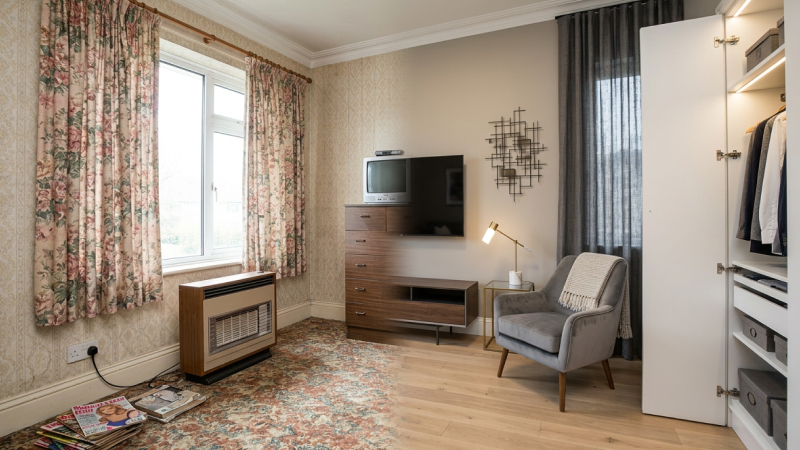
What staging does, at a fundamental level, is remove the visual noise that prevents buyers from imagining themselves living in a property. Clutter, personal items, awkward furniture placement, and poorly photographed rooms all create friction in the buying process. Staging reduces that friction systematically, starting with the listing photographs and extending through to the physical viewing experience.
What Does House Staging Involve in Practice?
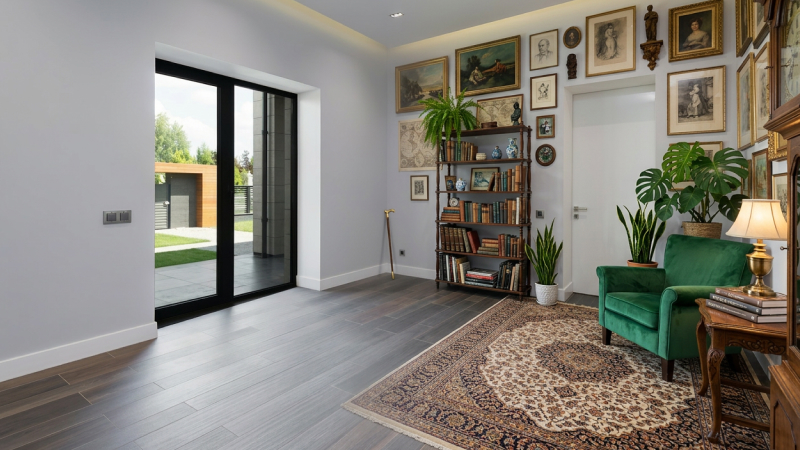
A well-staged house looks deliberately calm and inviting, a version of itself that's been edited for effect rather than lived in for convenience. The practical activities that create that result are consistent across staging methods:
Decluttering removes anything that makes rooms feel smaller, busier, or more personalised than necessary. This includes excess furniture, personal collections, items on kitchen worktops, and anything stored on floors or against walls. The rule of thumb is: if it doesn't improve how the room looks in a photograph, it shouldn't be in frame.
Depersonalising takes the property's identity down a notch so buyers can project their own. Family photographs, children's artwork, strongly individual design choices, and anything that reminds viewers this is someone else's home, all of these create subtle psychological distance between the buyer and the property.
Cleaning and minor repairs are the foundations without which nothing else works. Scuffed skirting boards, grimy grout, limescale-covered taps, and visible maintenance issues undermine the effect of every other staging decision. The property needs to look well-maintained before any styling has meaning.
Furniture placement is about photography first, liveability second. The arrangement that suits how a family actually uses a room is often not the arrangement that makes the room look largest and most purposeful in a photograph. Staging rearranges furniture to create clear sight lines, highlight proportions, and give the camera the best possible composition.
Styling is the finishing layer, cushions, throws, plants, artwork, fresh towels, and simple accessories that add warmth and a sense of liveability without adding personal identity. Styled rooms feel ready to move into; unstyled rooms feel like someone else's problem.
Who Stages Houses in the UK?
Professional Home Stagers
Professional stagers offer a range of services from a basic consultation visit to full staging where they source, deliver, and place furniture and accessories. The UK staging industry has grown significantly over the past decade, driven partly by the influence of property television programmes and partly by the rise of listing platforms where photography is the primary decision-making tool for buyers.
It's worth noting that the UK staging industry is unregulated. There is no formal qualification or accreditation required to advertise as a professional stager. Quality varies. When vetting a stager, the most reliable indicators are a portfolio of before-and-after listing photography and verifiable references from estate agents who have worked with them.
Estate Agents
Most UK estate agents now incorporate some level of staging guidance into their pre-listing process, ranging from a basic checklist sent to vendors to a pre-photography walkthrough by the listing agent. The quality and depth of this guidance varies considerably between agencies. Agents at the more proactive end of the spectrum now routinely recommend AI virtual staging for listing photography as a standard part of their service, particularly for vacant properties.
Self-Staging
For sellers with a reasonable property in decent condition, self-staging is entirely viable. The challenge is objectivity. Most sellers have lived in a property long enough that they no longer see what a first-time viewer sees. A single consultation with a professional stager, even if the seller then does all the work themselves, typically pays for itself in the quality of the final listing photography.
Does House Staging Actually Work?
The Buyer Psychology Behind It
Staging works because of how buyers make decisions. The research on buyer decision-making consistently shows that property purchase decisions are formed emotionally and then rationalised logically afterwards. Online listing photos are where that initial emotional response is formed, and for most buyers browsing Rightmove or Zoopla, it takes a few seconds.
A staged property communicates something unstaged properties do not: it shows buyers a version of the space they can imagine living in. It removes the effort of visualisation. Buyers don't have to mentally remove the current owner's furniture, imagine what the room would look like with different styling, or work out whether their sofa would fit. They see a plausible, aspirational version of the space immediately.
The chain of effects flows directly from that first impression:
- Better listing photos generate more clicks on property portals
- More clicks convert to more viewing requests
- More viewings create competition between buyers
- Competition reduces the seller's pressure to accept below-asking offers
- The property spends less time on market overall
Where Staging Makes the Biggest Difference
The impact of staging is not uniform across all property types and situations. It is most clearly measurable in four scenarios.
Empty properties are the most dramatic case. Vacant rooms are notoriously difficult to sell from photographs. Without furniture, buyers cannot read scale, assess proportions, or form any emotional connection with the space. They see bare walls and bare floors and struggle to imagine the room as habitable. AI virtual staging was effectively built to solve this problem, placing furniture and styling into the photograph without requiring any physical staging of the space.
Properties that have been on the market for four weeks or more without generating the expected level of viewings represent a second high-impact use case. When a listing underperforms, the photography is almost always a contributing factor. Refreshing the listing with new photography and AI virtual staging before relaunching is one of the most effective tactics for resetting buyer perception.
Competitive price brackets, where a buyer searching within a specific range has ten or fifteen comparable options, represent a third scenario where staging pays clear dividends. When the financial and locational variables are similar across multiple listings, buyers filter on presentation. A staged property moves to the top of that shortlist.
Properties with challenging photography are the fourth scenario. Some rooms simply do not photograph well without careful staging, narrow hallways, rooms with awkward proportions, spaces that feel dark or closed in on camera. AI virtual staging can address these problems digitally, showing a more spacious and better-lit version of the room that matches the property's actual quality more fairly.
Where Staging Has Less Impact
It's also worth being direct about the limits of staging. It won't fix structural problems, and it won't compensate for overpricing. A property priced 10% above its market value with excellent staging will still sit on the market. Staging is one component of a broader marketing and pricing strategy, not a substitute for accurate valuation and honest assessment of the property's condition.
How Much Does House Staging Cost in the UK?
The Range of Options
House staging costs vary by method. At the DIY end, the investment is primarily time plus perhaps £100 to £200 for accessories and cleaning supplies. A professional consultation, a stager visits, assesses, and produces a written brief for the seller to action, costs between £150 and £500. Partial staging, where a stager handles specific rooms with sourced furniture and accessories, runs from £500 to £1,500. Full professional staging of a vacant property requiring furniture hire starts at around £1,500 and can reach £5,000 or more for larger properties.
AI virtual staging operates at a different price point entirely. Staging three to four listing photographs, which covers the key rooms that drive viewing decisions, costs under £20. That covers the living room, kitchen, and master bedroom: the three spaces that account for the majority of buyer engagement with any listing. The turnaround is not days but minutes.
Deciding What to Spend
A practical decision framework for UK sellers: properties under £300k are best served by DIY physical preparation combined with AI virtual staging on the key listing photographs. This approach delivers professional-quality results for a minimal outlay. Properties between £300k and £600k benefit from a staging consultation plus AI virtual staging, with the seller implementing the stager's recommendations and using virtual staging for the final photographs. Properties above £600k with significant vacant rooms or high-value presentation requirements may justify partial or full physical staging, though AI virtual staging on top of that physical work still improves the listing photography output.
House Staging vs AI Virtual Staging, Understanding the Difference
What Each Method Actually Does
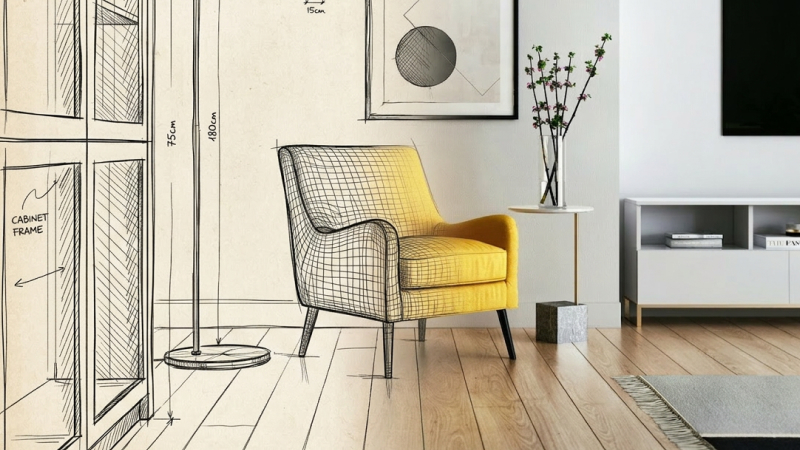
The most important thing to understand about this comparison is that AI virtual staging and physical house staging are not competing for the same job. They solve adjacent but distinct problems.
Physical staging affects what buyers experience during a viewing, the way a room feels when they walk into it, the sense of space and warmth, the ease of imagining their own furniture in the space. It's the version of staging that matters once the buyer has decided to visit.
AI virtual staging affects what buyers experience when they first encounter the listing online, the listing photograph they see on Rightmove, the image that determines whether they click through for more detail, whether they share the listing, and whether they request a viewing. It's the version of staging that determines whether the phone rings.
For most UK properties in 2026, the online impression is the more strategically important of the two. The vast majority of buyers never visit a property they haven't already pre-approved based on its photography. Getting that photography right is the primary staging challenge.
When AI Virtual Staging Is the Right Call
AI virtual staging through a tool like VirtualStagingExpert is the right choice when the property is vacant and physical furniture hire is disproportionate to the budget. It's the right choice when the seller needs to go live quickly without waiting on a stager's availability. It's the right choice when the rooms look acceptable in person but don't photograph well empty or cluttered. And it's the right choice when listing photos need to improve without disrupting occupants or requiring the property to be physically altered before sale.
The practical combination that delivers the best result for most UK listings: sound physical preparation of the property (declutter, clean, minor repairs, furniture arrangement) combined with AI virtual staging on the key listing photographs. This approach delivers a professionally presented listing at a fraction of the cost and logistics of full physical staging.
FAQ
Is house staging the same as home staging?
In practice, yes. Both terms describe the process of preparing a residential property for sale through decluttering, styling, furniture arrangement, and presentation techniques targeted at buyer psychology. "House staging" appears more commonly in searches from private sellers with detached or semi-detached properties; "home staging" is the broader industry term used by professionals. The process and objectives are identical.
Do I need to stage every room in my house?
No. The living room, kitchen, and master bedroom are the rooms buyers examine most carefully in listing photographs. These three spaces drive the majority of viewing decisions. A well-staged hallway helps during physical viewings but has less impact on online listing performance. Other rooms should be clean, tidy, and clearly purposeful, but full styling is not required across the whole property.
Can staging help a property that's been on the market for months?
Yes, and it's one of the most effective reset tactics available. Re-staging before relaunching, with refreshed photography including AI virtual staging, changes the buyer perception of the listing. Properties that have been on the market long enough to acquire stigma benefit significantly from a complete refresh of their visual presentation before re-entry to the market.
Does house staging increase the sale price?
Staging is more directly linked to reducing time on market than to directly increasing the final price. The relationship is real but indirect: a property that generates strong competition between buyers through good presentation faces less downward price pressure. The seller who isn't desperate to accept the first offer because the listing has been sitting for months is in a significantly stronger negotiating position.
Is AI virtual staging legal in UK property listings?
Yes. AI virtual staging is legal in UK property listings provided the images are clearly labelled as virtually staged or digitally enhanced so that buyers are not misled about the current state of the property. This is standard practice across the industry.
How long does house staging take?
DIY staging can be completed over a weekend. A professional consultation takes a few hours, with the seller typically actioning the recommendations over the following week before photography. Full professional staging, sourcing, delivering, and placing furniture, takes three to seven days. AI virtual staging on listing photographs is completed in minutes.
What's the biggest mistake sellers make when staging?
Underestimating how much needs to leave the property. Sellers consistently declutter to about 60% of what's actually required, removing the obvious clutter but leaving behind the accumulated possessions that make rooms feel smaller and more personal than they should. The most common regret after seeing the listing photography is wishing more had been removed before the shoot.
Conclusion
House staging works because of buyer psychology, not because it hides anything about a property. Buyers make decisions based on visual first impressions, and those impressions form online, faster than most sellers realise, based on photography they've often paid too little attention to.
The question for UK sellers in 2026 is not whether to stage. It's which method is appropriate for their budget, timeline, and property type. For the majority of listings, AI virtual staging on key listing photographs, combined with sound physical preparation of the property itself, delivers the strongest result at the lowest cost. For sellers looking to improve their listing photography quickly without the logistics of physical staging, VirtualStagingExpert produces professionally staged listing photos in minutes, at a price point that makes staging accessible for every type of UK property.