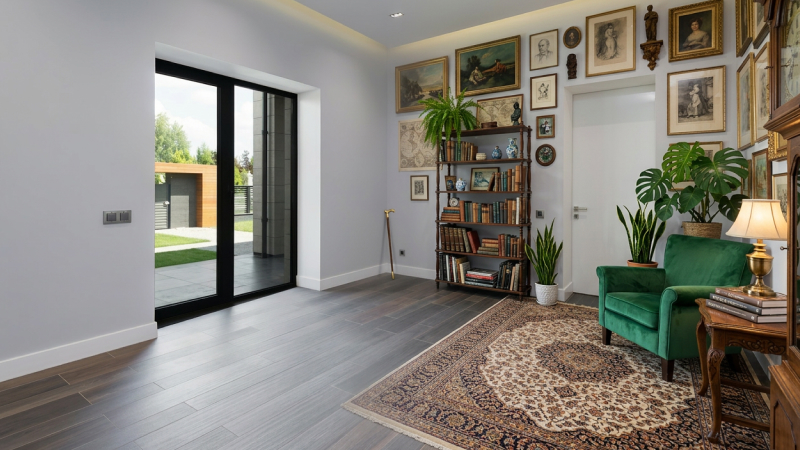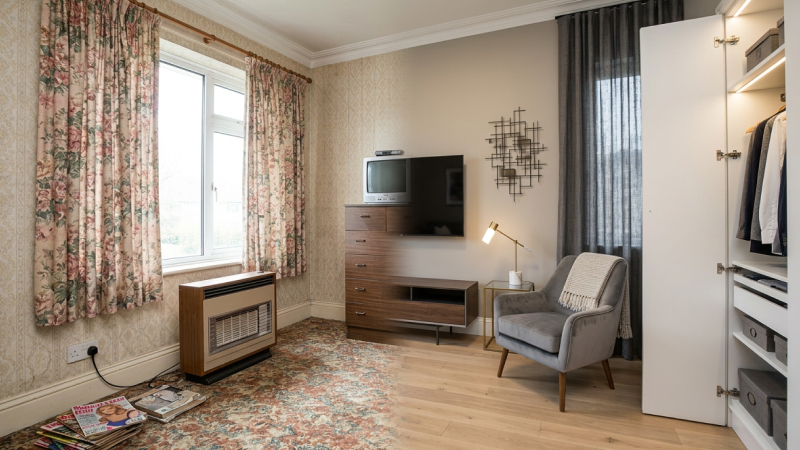
Residential real estate agencies waste an average of £2,000-£7,000 per property on traditional staging, with 45% of staged homes sitting on the market longer than expected. The coordination headaches, capital tied up in furniture inventory, and geographic limitations have made traditional staging increasingly unsustainable for modern agencies trying to scale.
Enter virtual staging, a technology that's fundamentally transforming how real estate agencies present properties to buyers. By digitally furnishing empty or outdated spaces using advanced AI, top-performing agencies are now closing listings 73% faster while reducing staging costs by up to 99%. Yes, 99%.
This isn't just about saving money. Virtual staging AI has become a competitive weapon for forward-thinking agencies, enabling them to stage multiple rooms or properties simultaneously, use staging to test different design styles for the same listing, and maintain consistent brand presentation across entire portfolios, capabilities that were impossible with traditional staging.
In this guide, we'll show you exactly how leading agencies are leveraging virtual staging to gain market share, the ROI framework your CFO needs to see, and a proven implementation roadmap you can follow. We'll also address the elephant in the room: when virtual staging AI free tools make sense versus when agencies need professional-grade solutions.

What Is Virtual Staging?
Virtual staging is the process of digitally adding furniture, décor, and design elements to photographs of empty or outdated property interiors. Unlike basic photo editing, modern virtual staging uses artificial intelligence to create photorealistic room designs that help potential buyers visualise a property's full potential.
Types of Virtual Staging Solutions
Not all virtual staging is created equal. The market has evolved into a couple of distinct approaches:
AI-Powered Virtual Staging (Modern Standard)
Fully automated platforms that use artificial intelligence to analyse photos and generate staged images in seconds. This approach offers the best combination of speed, cost-efficiency, and quality consistency. Ideal for agencies who are modern and adopt forward-thinking methods and technologies.
Manual 3D Rendering (Traditional Approach) Human designers create staged images using 3D modeling software. While this can produce exceptional quality, it's time-intensive (3-5 days per property) and expensive (£20+ per room). Best reserved for ultra-luxury listings where budget isn't a constraint.
Use Cases for Real Estate Agencies
Virtual staging delivers the highest ROI in these scenarios:
- Vacant properties – The obvious use case, but still only 40% of agencies are staging vacant listings digitally
- New construction pre-sales – Market properties before they're even built
- Luxury listings – Create multiple staging variations targeting different buyer demographics (young professionals vs. families vs. retirees)
- Portfolio marketing materials – Maintain consistent brand presentation across all agency listings
The agencies winning market share aren't just using virtual staging occasionally, they've made it their default approach for property presentation.

Why Real Estate Agencies Are Switching to Virtual Staging AI
The shift from traditional to virtual staging isn't a trend, it's a fundamental business model improvement. Here's why agency directors and marketing leaders are making the switch.
The Traditional Staging Problem
For Agents:
Traditional staging creates operational nightmares that directly impact your bottom line. You have capital locked up in staging inventory that is an ongoing cost. You're coordinating furniture rental companies, interior designers, and photographers across multiple properties, an administrative burden that scales terribly.
For Marketing:
You're fighting for brand consistency with six different staging vendors who each have their own aesthetic. A/B testing different styles for the same property? Impossible without staging twice. Scaling during high-inventory spring seasons means either saying no to listings or delivering inconsistent quality.
The photography coordination alone creates bottlenecks, schedule the stager, wait for delivery, coordinate photographer availability, then hope weather cooperates for exterior shots.
The Virtual Staging Advantage
Cost Efficiency That Transforms Economics
Virtual staging reduces per-room costs from £1000 (traditional) to £2 (digital), a 99% cost reduction. For an agency staging 5 listings monthly, that's £100,000 in annual savings.
The real financial impact goes beyond direct cost savings:
- Eliminated staging coordinator costs – Hours of meeting, planning, and logistical overhead
- No furniture storage costs – £100+ per month
Speed & Scale That Create Competitive Moats
Virtual staging platforms deliver finished images in minutes versus 2-3 weeks for traditional staging. This speed advantage means:
- Listings go to market instantly (capturing buyer interest immediately)
- You can stage multiple properties simultaneously without additional overhead
- A/B test different styles for the same property across various buyer channels
- Instant style variations let you target different buyer demographics instantly
- No seasonal capacity constraints during high-inventory periods
The Competitive Pressure Is Real
Industry research shows agencies using virtual staging close 40% faster than competitors still relying primarily on traditional staging. Buyer expectations have shifted, professionally presented listings are now the baseline, not a differentiator.
Top-performing brokerages have made virtual staging their standard operating procedure. The question isn't whether to adopt virtual staging anymore, it's whether you can afford to fall behind while your competitors build efficiency and capacity advantages.

Virtual Staging AI Free vs. Paid Solutions
If you've searched for "virtual staging ai free," you've seen dozens of platforms offering free tiers. Here's what agency decision-makers need to know about free versus paid solutions.
Understanding Virtual Staging AI Free Options
What Free Websites Typically Offer:
- Older and less capable AI models
- Watermarked outputs
- Low resolution outputs
- Very limited optionality to try out their service
Why Agencies Need Paid Virtual Staging Solutions
Professional Output Quality
Paid platforms deliver:
- Watermark-free images suitable for portal and marketing
- High-resolution exports (2K)
- Full commercial licensing rights
- Portal-compliant disclosure tools (automated watermarks you control)
- Video virtual staging, animated walkthroughs with staged furniture
ROI Calculation for Agency Directors
Here's the framework to justify paid virtual staging to your CFO:
Traditional Staging Costs:
- Average cost per listing: £1000
- 5 listings monthly: £5,000
- Annual cost: £60,000
Virtual Staging Subscription:
- 25 rooms/month plan: £35/month
- Annual cost: £420
- Annual savings: £59,580
Even a modest paid subscription at £50/month (£60/year) delivers 99% cost savings versus traditional staging.

Virtual Staging Best Practices for Maximum ROI
Having the right platform is only half the equation. Here's how leading agencies maximise their virtual staging investment.
Strategic Staging Decisions
Which Properties to Stage Virtually:
Not every listing requires virtual staging. Focus your investment on:
- Vacant properties – The obvious win; unstaged vacant homes sell for 6-10% less
- New construction pre-sales – Market properties before completion
- Cluttered properties - Virtual staging can declutter a room to show its true potential for buyers
If you're not sure which room to stage first, we've written an article that breaks down the most important rooms your should consider.
Style Selection Strategy:
- Match neighbourhood demographics (don't stage a starter home with luxury furniture)
- A/B test styles on secondary photos to identify what resonates
- Consider seasonal factors (bright, airy staging in winter months when lighting is poor)
- Avoid over-personalising (neutral contemporary outperforms trendy styles)
Disclosure & Ethics
Legal Compliance:
Every portal listing website has disclosure requirements for virtually staged photos:
- Always disclose images are virtually staged, we have the tools to enable you to disclose this
- Never misrepresent property condition
- Maintain before/after image sets for transparency
Ethical Considerations:
- Stage what's realistically possible (don't add windows, rooms, or views that don't exist)
- Match realistic price point furnishing (Don't stage a start home with luxury staging furniture)
- Avoid creating false expectations that lead to buyer disappointment
Multi-Channel Marketing Strategy
Maximise your virtual staging investment across all marketing channels:
Portal Listings:
- Lead with your best virtually staged image as the hero photo
- Include a mix of staged and unstaged photos for disclosure transparency
- Clearly state "Virtually Staged" in listing description
Social Media:
- Before/after reveals generate 3x engagement of standard listings
- Carousel posts showing different staging styles
- Video walkthroughs with virtual staging overlay
- Stories highlighting the transformation process
Email Marketing:
- Segment by buyer demographic, send matching staging styles
- "Just Listed" campaigns featuring professional virtual staging
- Drip campaigns showing property evolution
Print Materials:
- Export high-resolution images for brochures and direct mail
- Ensure consistent branding across all touch points
- Feature virtual staging in agency portfolio materials

Getting Started: Your Agency's Virtual Staging Roadmap
Ready to implement virtual staging at your agency? Here's a practical four-phase approach.
Phase 1: Pilot Program (Month 1)
- Select 5-10 properties for initial testing
- Designate a virtual staging champion on your team (typically marketing director or top sales agent)
- Document lessons learned and agent feedback
Phase 2: Optimisation (Months 2-3)
- Analyse pilot results compared to traditionally marketed properties
- Refine style selection process based on what performed best
- Develop internal best practices guide
- Expand virtual staging to 50% of vacant listings
Phase 3: Scale (Months 4-6)
- Full team training rollout across all agents
- Integration with existing marketing workflow and Portal listing processes
- Establish quality control procedures
- Make virtual staging the default for vacant properties

Transform Your Agency's Property Presentation Today
Virtual staging has evolved from a niche technology to a fundamental competitive requirement for modern real estate agencies. The agencies winning market share aren't waiting for perfect solutions, they're implementing virtual staging now and iterating their approach based on results.
The numbers are compelling: over 99% cost reduction, faster sales, and the ability to scale presentation quality across unlimited listings simultaneously. But the real advantage is strategic, virtual staging fundamentally changes your agency's capacity constraints and marketing flexibility.
Whether you're a 5-agent boutique firm or a 50-agent regional powerhouse, virtual staging levels the playing field. You can now present properties with the same professional quality as the largest brokerages, while maintaining brand consistency that builds market recognition.
The question isn't whether virtual staging works, thousands of agencies have proven the ROI. The question is whether you'll implement it before or after your competitors do.
Ready to transform your agency's listing presentation? Start with a pilot program on your next 5 vacant listings and measure the results. The data will make the case for scaling agency-wide.
Try our virtual staging free with up to 5 photos, no commitments, no credit card required.